

Organic growth is easy to talk about and much harder to deliver, especially when the data behind marketing decisions is incomplete. For financial institutions trying to deepen relationships, reach younger accountholders, and improve performance, disconnected data creates real barriers to relevance. That challenge, and the opportunity to solve it, makes this an important conversation heading into Kinections26, where Mole Street will be joining as a sponsor.
Financial institutions are under pressure to grow deposits, deepen relationships, and stay relevant with younger accountholders whose expectations are shaped by personalization everywhere else.
Jack Henry’s 2026 benchmarking survey also highlights a strategy gap: while many institutions see the importance of reaching younger audiences, only 26% report having a formal strategy to acquire younger accountholders.
At the same time, the data needed to fuel smarter, sustainable growth is rarely sitting in one clean, complete place. Life events, behavioral signals, spending patterns, and business financials are spread across hundreds of sources, and no single third-party source captures them all. That creates a familiar problem: marketers miss signals, act too late, and build campaigns on an incomplete view of the customer or member.
But the cost of fragmented data doesn’t stop with marketing. Checking account activity alone tells a rich story: income patterns, spending habits, early signs of financial stress. When that story stays locked in the core, only one team ever sees a piece of it. When it’s connected across the institution, the same signal that flags a fraud risk can also surface a timelier loan offer, and the same behavioral pattern that sharpens a marketing segment can support a stronger credit decision.
That’s what makes connected data an institution-wide advantage rather than a marketing-only one. Fraud teams catch anomalies sooner. Lending teams work from a fuller financial picture. Frontline staff walk into conversations with context instead of guesswork. And the consumer feels the difference in ways that have nothing to do with a campaign: fewer irrelevant offers and personalized service that reflects a real understanding of their financial life.
Marketing may be the first to feel the pain of disconnected data, but every part of the institution is paying the same price. And for marketing specifically, solving it comes down to one thing: relevance.
Organic Growth Relies on Relevance. Relevance Relies on Data.
Organic growth is not just about sending more campaigns. It is about creating timely, contextual and useful interactions that make an institution feel more relevant over time.
That could mean recognizing when a member is ready for their next product, spotting a small-business opportunity before a competitor does, or delivering content that aligns with a real financial need instead of a generic marketing calendar. The institutions that are able to achieve and sustain growth are often the ones that can turn consumer context into action fastest.
Incomplete Data Creates Invisible Blind Spots
When growth campaigns underperform, it is easy to blame the creative, the offer, or the timing. But incomplete or outdated data is often the bigger problem. Single-source data creates blind spots because no one provider can capture the full range of consumer and small-business signals needed to identify meaningful opportunities.
This problem is a common one. Most institutions operate dozens of vendor systems, yet 56% keep data locked in the system that created it. The result? Slow campaigns, poor ROI measurement, impossible cross-sell efforts, and declining engagement.
That matters even more in a world of predictive marketing and AI. Sophisticated analytics cannot do much with thin inputs, and intent signals lose value quickly when institutions cannot act in time.
Better Data Makes Better Marketing Possible (& More Personal)
This is where a connected data foundation becomes essential.
Kinective’s approach is built to collect data from core systems, lending platforms, and digital channels; clean and enrich that information; analyze it; and activate it in downstream marketing systems. Because it is purpose-built for financial institutions, it is also designed to account for realities like joint accounts, indirect lending structures, and transaction categorization.
That foundation matters because organic growth requires more than access to raw data. It requires usable intelligence that marketing teams can actually work with.
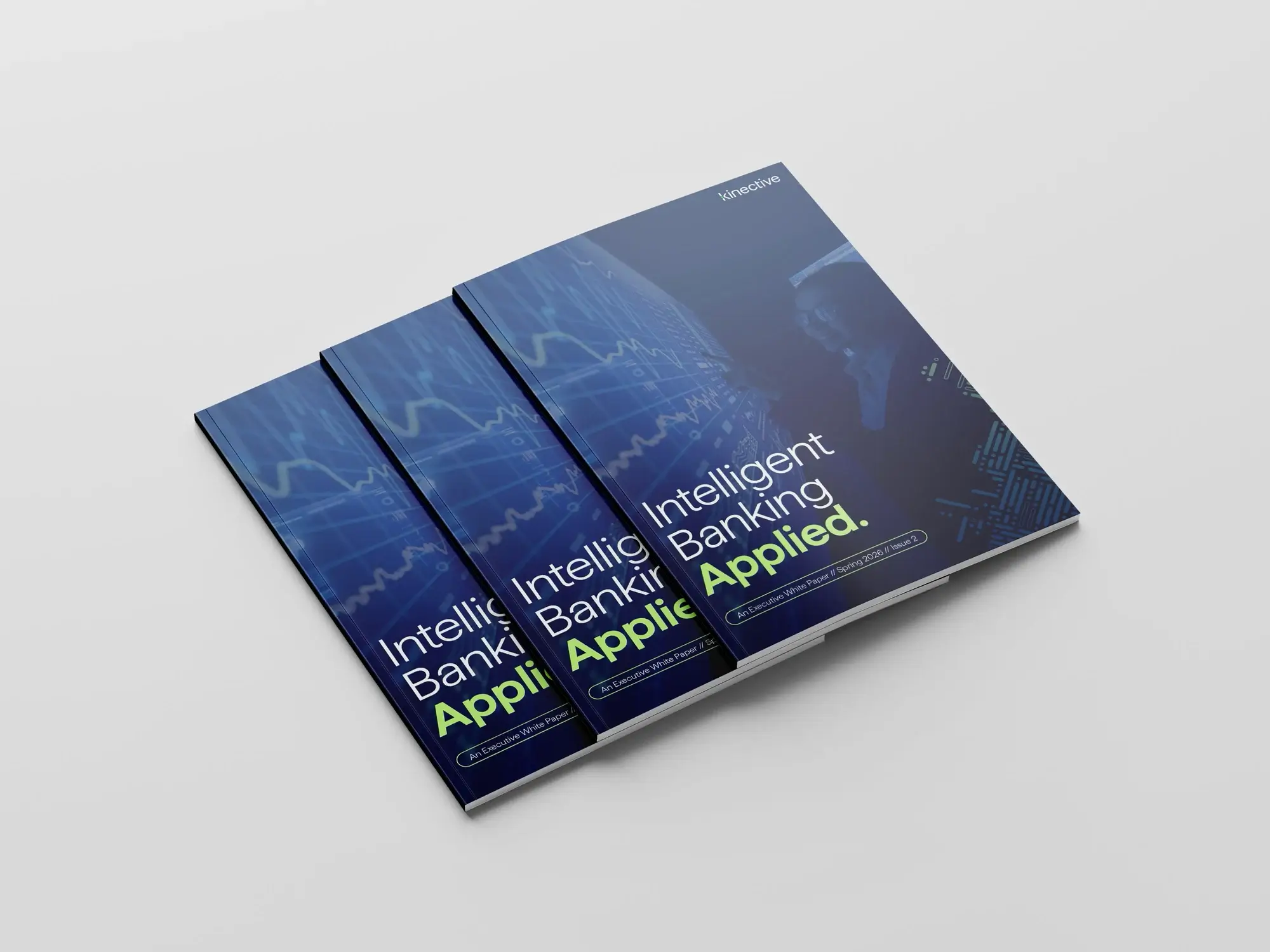
Make Your Institutions Data More Meaningful
Your customer/member data lives in a lot of places across your organization. This white paper will help you understand the value hiding in plain sight and what you need to do to actually USE it.
Activation Is Where Strategy Turns Into Growth
Data only creates value when teams can use it.
That is where the combination of Kinective, Mole Street, and HubSpot becomes meaningful. Mole Street helps connect and map the data into HubSpot, train teams, and reduce the operational friction that often keeps marketers dependent on IT for execution. HubSpot then becomes the environment where segmentation, automation, nurture journeys, and conversion tracking can actually happen with better inputs behind them.
The result is not just more efficient campaign execution. It’s more precise, more timely, and more personalized marketing.
What That Looks Like in Practice
With stronger data and activation in place, institutions can market in a way that feels more helpful and less generic.
A younger accountholder might receive content tied to post-grad finances, budgeting, or early borrowing needs. A growing business owner might move into journeys related to cash flow, payments, or borrowing. A newly acquired member base might receive onboarding that reflects where each person is in their relationship with the institution instead of a one-size-fits-all welcome series.
That is the difference between marketing at people and marketing with context.
A CMO’s Experience
Keesler Federal Credit Union offers a clear example. After acquiring Jefferson Financial and adding 40,000 new members, the team needed a way to access member data, segment audiences, and onboard new members without relying on IT for every move.
According to Susan Song, Keesler’s CMO, Kinective connected the needed data environment in 60 days, while Mole Street helped the team get onboarded, trained, and fully operational in HubSpot. The outcome was greater marketing autonomy and targeted onboarding campaigns for 40,000 new members.
“Prior to Kinective, we didn’t have access to our core data, we didn’t have a CRM, we didn’t have a data lake, we didn’t even have a data architecture that we could source from to connect to HubSpot. And so without Kinective’s data bridge, we were unable to fully utilize HubSpot capabilities including engagement campaigns, AI, smart campaigns and most importantly, be able to deliver those personalized experiences and communications to our members.
In 60 days, Kinective was able to get us there. They were able to connect HubSpot to our core data and operational data. In addition, our implementation partner, Mole Street has been vital in getting us up and running, working with Kinective, setting up the data mapping, organizing the templates, getting our team onboarded and trained and fully operational. We are now fully implemented on HubSpot. We are running campaigns and we are starting to drive engagement and reach and we’re really excited about that.”
Susan Song, CMO of Keesler Federal Credit Union
Data As the Differentiator
Organic growth does not start with more campaigns. It starts with a more complete picture of the people and businesses an institution wants to serve.
When data is connected, enriched, and activated, marketing teams are better equipped to recognize opportunity, respond to real intent, and build the kinds of experiences that deepen relationships over time. In a market where everyone is chasing growth, that ability to act on better data may be the real differentiator.

