
Faster Closings. Smarter Lending.
Better Outcomes Across Your Portfolio.
Kinective helps financial institutions connect their lending systems, digitize the document journey, and gain the visibility they need to close more loans efficiently — in mortgage, consumer, and commercial — without adding headcount or complexity.
Lending Challenges Facing Banks and Credit Unions Today
Why Lending Operations Have Become One of Banking’s Biggest Efficiency Problems
Lending is the lifeblood of most financial institutions. But for many banks and credit unions, the process of originating, managing, and closing loans still runs on a patchwork of disconnected systems, manual handoffs, and institutional workarounds that slow everything down. And today, operational friction doesn’t just cost your institution money — it costs you borrowers. Consumers applying for a mortgage, auto loan, or personal line of credit now expect the same kind of seamless digital experience they get from Amazon or Rocket Mortgage. When your process doesn’t deliver that, they don’t complain — they leave.
According to Freddie Mac research, top-performing mortgage lenders originate loans for $6,900 per loan. Bottom-quartile lenders spend $16,500 — and their 2025 update shows the average is now around $11,800. If your institution originates 1,000 mortgages annually at bottom-quartile cost, you are spending $9.6 million more than your best-in-class competitors on origination alone. That is not a margin problem. That is a process problem — and it extends well beyond mortgage into consumer and commercial lending too
The Biggest Lending Challenges Financial Institutions Face.
- Too many systems, too many handoffs — and no single view of where things stand. Your CRM, loan origination system, document workflow, eSign platform, and core banking system each hold a piece of the lending story. But when those systems don’t talk to each other, your team spends more time chasing status updates and re-entering data than actually moving loans forward. Every handoff is a potential stall point, and stall points cost you closings.
- Borrowers expect a seamless digital experience — and most FIs can’t deliver one. Today’s loan applicants will start, pause, and abandon an application the moment it gets complicated. Lengthy paper-based steps, requests to print and scan documents, delays in hearing back on status — these aren’t just inconveniences. They are the moments a borrower decides to try somewhere else. Loan abandonment is one of the most underreported revenue losses in community banking, and disconnected digital processes are the primary driver.
- No real-time visibility into where loans are stuck. By the time a loan application goes quiet or a large commercial loan gets refinanced away, the window to save it has often already closed. Without real-time visibility across all loan types, leadership, lenders and operations managers have no reliable way to know which borrowers need attention, where the bottlenecks are hiding, or how your team’s performance compares to what it should be.
- The document journey is still manual in too many places.
Printing, scanning, chasing signatures, coordinating notarizations, re-keying data into the core — these steps add days to closing timelines and create compliance risk along the way. Every institution that still relies on paper-based or semi-digital document workflows is paying for it in time, cost, and consumer experience. - Portfolio and performance data lives in silos.
Loan performance signals, delinquency trends, portfolio risk indicators, and cross-sell opportunities are scattered across systems. Without a unified reporting layer that aggregates and normalizes data from your CRM, LOS, and core, your leadership team is making portfolio decisions based on incomplete or stale information.The document journey is still manual in too many places. - Consumer and commercial lending have different needs — and most platforms only serve one. Mortgage lenders need digital document journeys and notarization. Consumer lending teams need fast, frictionless onboarding. Commercial teams need relationship and portfolio monitoring. Most point solutions address one of these well but do not provide insights and intelligence across all the ways one person interacts with your organization.
What Are the Costs to Fall Behind
on Lending Efficiency?
Institutions that don’t modernize their lending operations pay a compounding price: higher origination costs, longer time-to-close, increased loan abandonment from borrowers who expected better, greater compliance exposure, and a consumer experience that falls short of what today’s borrowers take for granted everywhere else in their financial lives. In a rate environment where margin pressure is constant, operational efficiency in lending is no longer optional — it is a competitive differentiator.
How Kinective Solves
Lending Operations for Financial Institutions
Key Lending Excellence Capabilities
Unified Data Normalization Across CRM, LOS, and Core
Kinective’s lending solution aggregates and normalizes data from all of your systems into a single, coherent view. That means your team stops managing the gap between systems and starts working from a shared source of truth — one that reflects where every loan stands as well as identifies opportunities for process improvement, customer retention and profitability improvement.
Loan Performance and Portfolio
Knowing where your loans are is only half the picture. Kinective surfaces loan performance reporting and portfolio-level analytics that give lending officers, operations managers, and executive leaders the visibility they need to manage risk, identify opportunity, and make decisions based on current data rather than last month’s export. Whether you are monitoring delinquency trends in consumer lending or managing concentration risk in commercial, the intelligence is there when you need it.
eSign and Digital Notary — From Application to Archive
Kinective’s lending solution connects eSignature and digital notarization directly into the lending workflow, so the document journey runs from application to archive without leaving the platform. In-person electronic notarization and remote online notarization are both supported — eliminating the third-party scheduling friction, manual audit trail management, and paper-based processes that slow down mortgage and commercial loan closings. Institutions using Kinective’s digital notary capabilities have seen savings of up to $444 per loan and reductions in turnaround time of more than two hours per closing.
A Borrower Experience Worth Coming Back For
The best lending operation isn’t just the most efficient one internally — it’s the one borrowers remember for the right reasons. Kinective’s guided web forms and digital workflows create a clean, intuitive application experience that guides borrowers through each step, collects what’s needed in the right sequence, and keeps the process moving without confusion or unnecessary back-and-forth. Less friction means less abandonment. And less abandonment means more funded loans.
Document Automation
Kinective replaces the manual handoffs, spreadsheets, and email chains that stall loans in progress with intelligent, guided web forms and automated workflows that move documents, data, and signatures through the right steps in the right order. Lenders spend less time chasing and more time closing. Operations teams stop re-entering data. And borrowers experience a faster, cleaner process from the moment they apply to the moment they receive funds.
Real-Time Core Banking and Loan Origination System Integration
Every capability in Kinective’s lending solution runs on a live connection to your core banking and LOS systems. That means loan data flows directly into the core without manual re-keying, closing conditions are validated against real-time account data, and completed transactions are boarded accurately the first time. The integration spans mortgage, consumer, and commercial lending — so your entire loan portfolio runs through a single, connected workflow rather than a collection of disconnected point solutions.
What Financial Institutions Are Saying

Andrew Britton
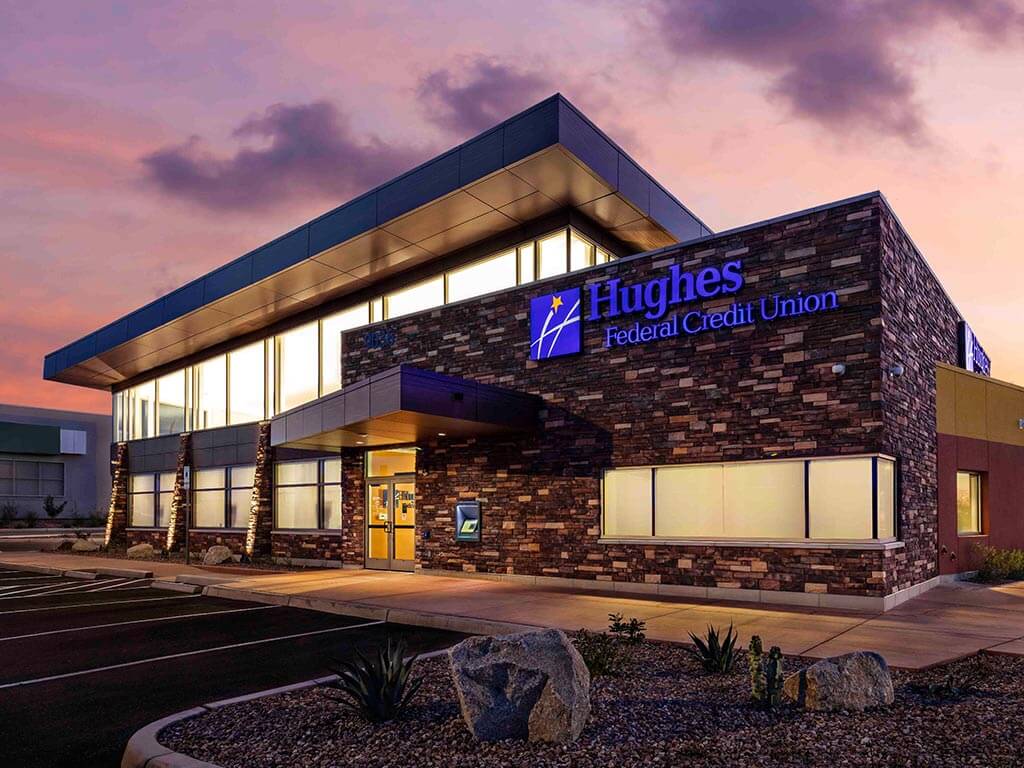
VP Lending, Hughes Federal Credit Union
Since implementing Kinective’s Sign and SignPlus to digitize their lending process, Hughes Federal Credit Union has cut average loan processing time from several weeks down to just 120 minutes — a 98% reduction — while increasing indirect lending volume by 27% and saving nearly $107,000 annually by eliminating express mail and manual document handling. Read the full Hughes FCU case study.
Mortgage lenders using Kinective’s end-to-end digital document journey have reduced origination costs significantly — moving from bottom-quartile spend toward the top-performer benchmark of $6,900 per loan.
Lending Excellence FAQs —
Answers to the Questions FIs Ask Most
Does Kinective's lending solution work across mortgage, consumer, and commercial lending?
Yes — and that breadth is intentional. Kinective’s lending solution is built to serve all three lending lines within a single connected framework. Mortgage teams benefit from digital document journeys and integrated notarization. Consumer lending teams gain faster onboarding workflows and frictionless eSign. Commercial teams get portfolio visibility and relationship-level reporting. The core integration and data normalization layer ties all three together.
How does Kinective help reduce loan abandonment?
By removing the friction that causes borrowers to give up. Kinective’s guided digital application workflows are designed to feel intuitive and straightforward — collecting information in a logical sequence, keeping borrowers informed of their status, and eliminating the document requests and back-and-forth that make many loan processes feel like an obstacle course. A smoother experience means more applications that actually make it to funding.
Does Kinective integrate with our existing loan origination system?
Most likely, yes. Kinective connects with the major LOS platforms used by community banks and credit unions, pulling data from your CRM, LOS, and core banking system into a unified view. If you are unsure whether your specific LOS is supported, reach out — our integration library continues to expand.
What is digital notary, and do we need it?
Digital notary enables your institution to conduct both in-person electronic notarizations and remote online notarizations without paper, third-party scheduling, or manual journal management. For institutions with moderate-to-high mortgage or commercial loan volume, it is one of the highest-impact steps toward a fully digital lending workflow. Savings of up to $444 per loan and a reduction of more than two hours in closing turnaround have been documented in institutions that have adopted it.
What is the difference between loan performance reporting and loan portfolio reporting?
Loan performance reporting focuses on individual loan health — payment status, delinquency indicators, and early warning signals that help lenders and relationship managers intervene before problems escalate. Loan portfolio reporting gives leadership a broader view of concentration, growth trends, and risk distribution across your entire book of business. Kinective surfaces both, drawing from normalized data across your CRM, LOS, and core.
How does Kinective help reduce the time it takes to close a loan?
By removing the manual steps that create delay. Kinective’s web forms and guided workflows replace email chains and status-chasing with automated document routing, real-time signature tracking, and direct core boarding. Data collected during the application process flows directly into your systems without re-keying. Notifications go out automatically when action is needed. The result is a faster, cleaner path from application to funded loan — for borrowers and for your team.
How long does implementation typically take?
Most institutions are up and running in a matter of weeks. Kinective manages the integration to your core, LOS, and document workflow systems, and works with your team to configure reporting, workflows, and automation around your specific lending processes and loan types.
Ready to Close the Gap Between Your Lending Operations and Your Top-Performer Potential?
See why 4,300+ financial institutions trust Kinective to help them lend smarter, close faster, and serve borrowers better.
